Event Recap
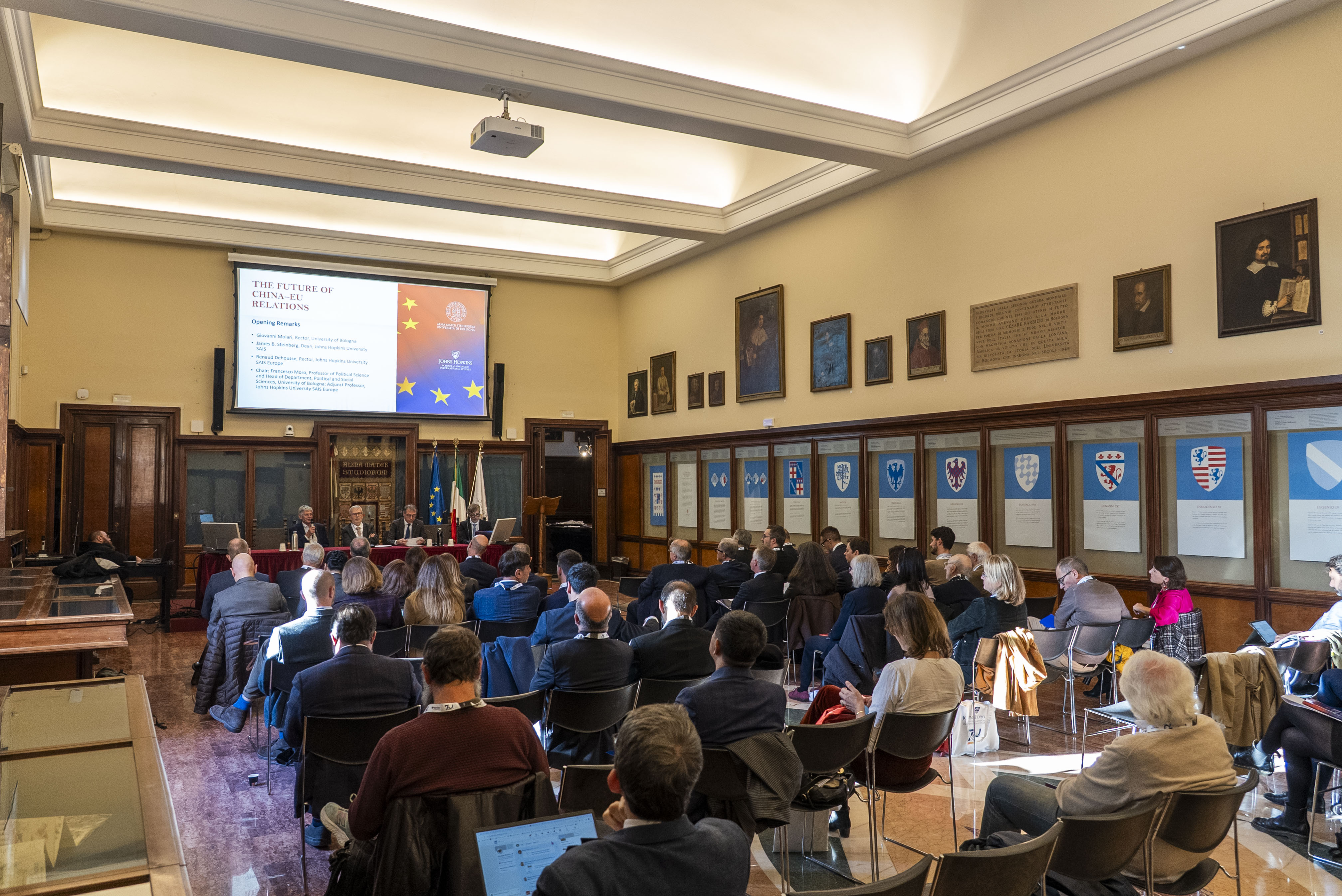
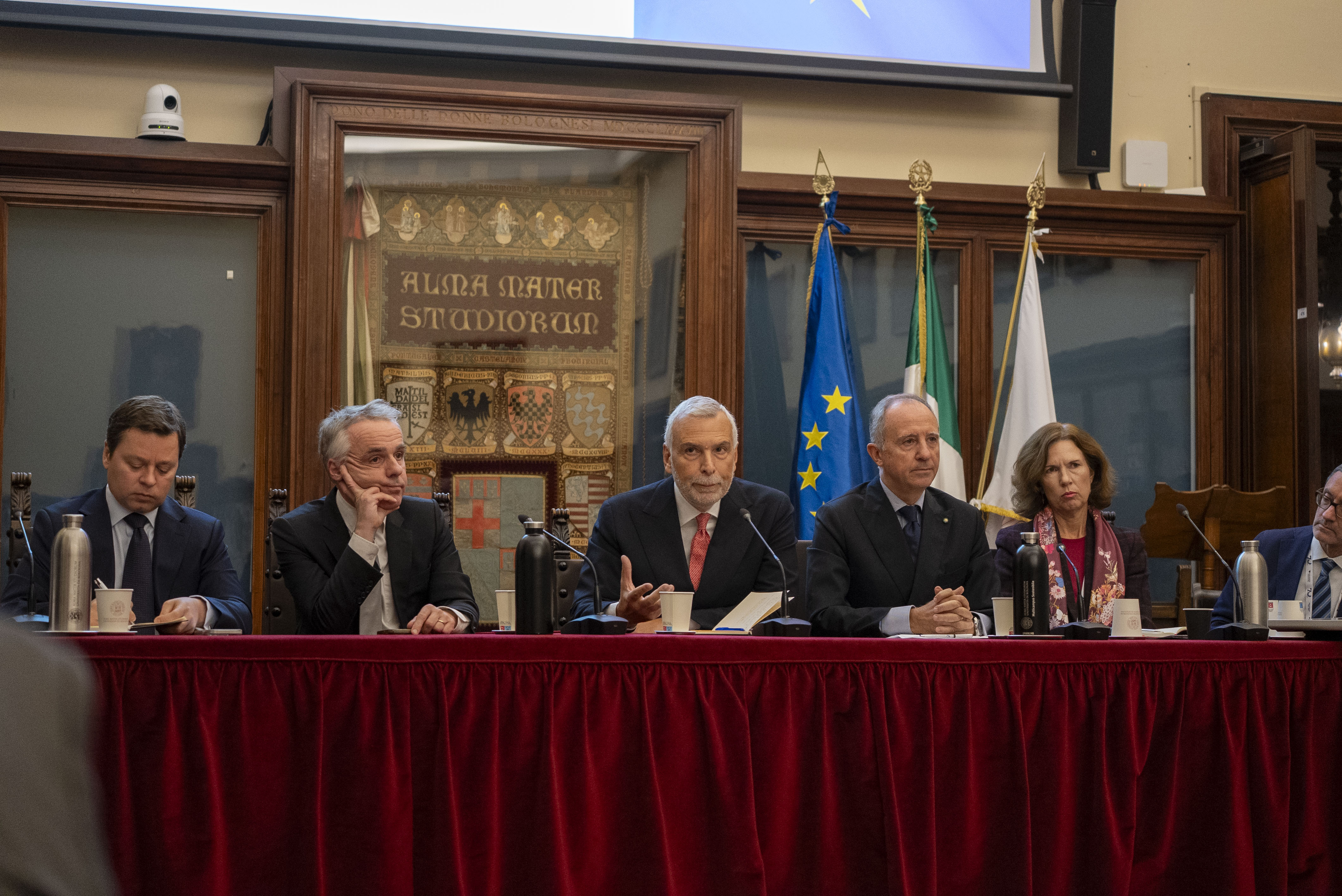
Marking the fiftieth anniversary of diplomatic relations between the European Union and the People's Republic of China, Turning Tides? – The Future of China–EU Relations was convened under the auspices of the collaboration agreement between the University of Bologna and Johns Hopkins University – SAIS Europe, reflecting both institutions' shared commitment to interdisciplinary scholarship and international engagement. Held on 27–28 October 2025 in the University of Bologna's historic Aula del VIII Centenario and at Johns Hopkins SAIS Europe, the conference opens with remarks by Giovanni Molari, James B. Steinberg and Renaud Dehousse, framed by Francesco Moro, setting the tone for two days in which Europe's relationship with China is treated less as a bilateral file and more as a stress test of the EU's capacity to act as a strategic subject in an increasingly polarized international system.
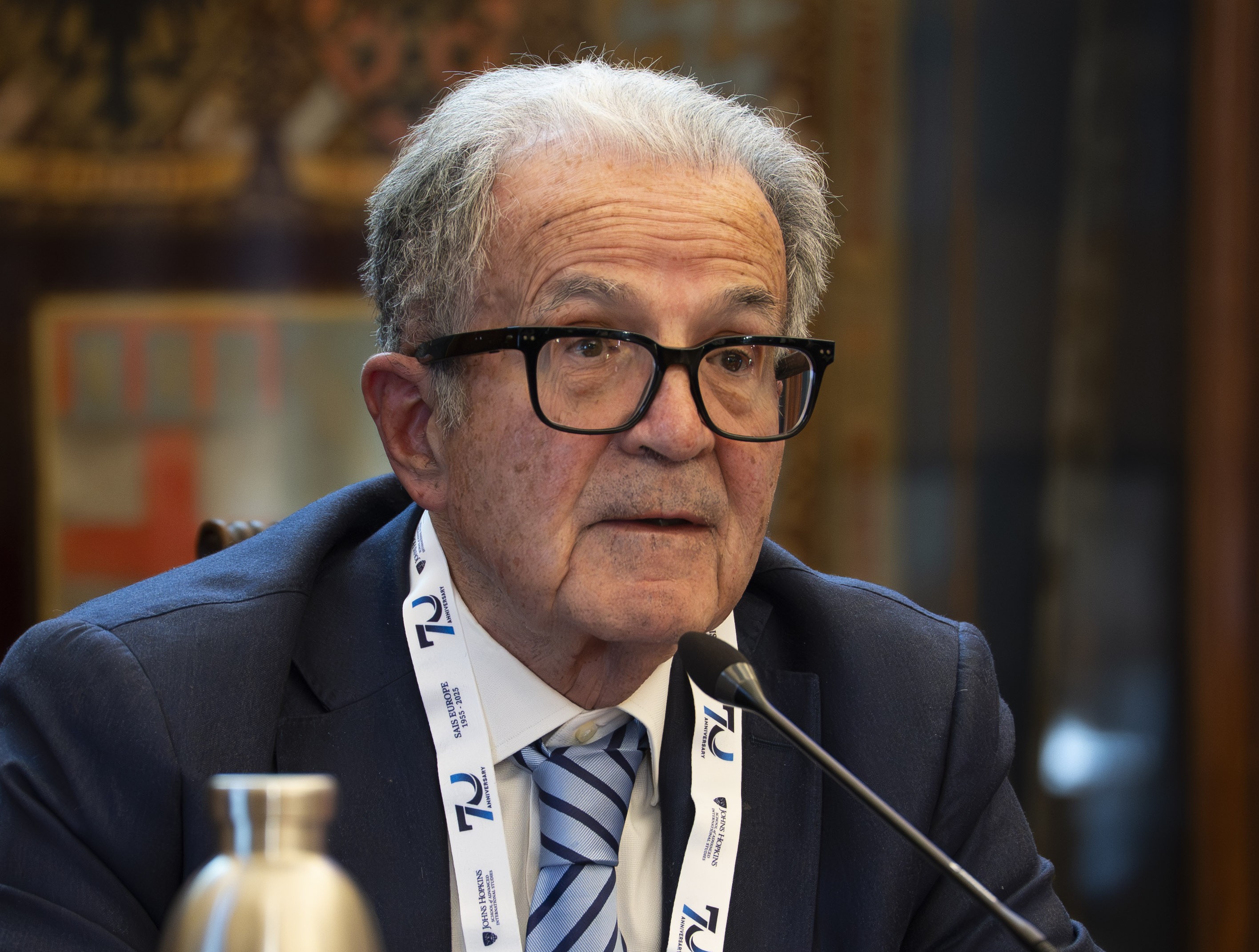
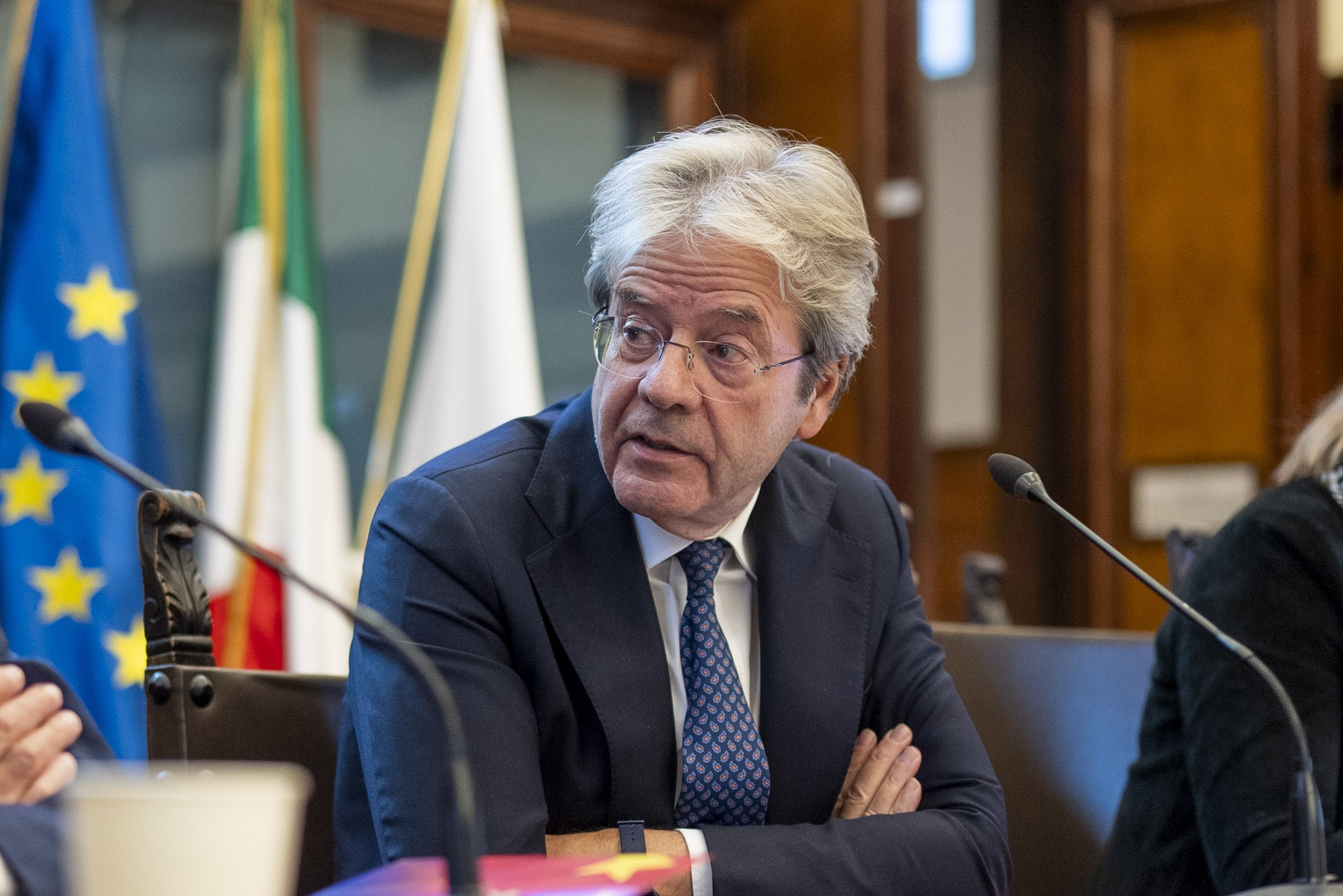
The first panel, on European leaders' outlooks, brought together Paolo Gentiloni, Sylvie Matelly and Romano Prodi under the guidance of Nathalie Tocci. Moving from the optimism of accession and WTO years to the present language of "systemic rivalry," they converged on a simple intuition: Europe's voice on China has faded as U.S.–China confrontation has intensified. Rebuilding that agency, they argued, requires defining de-risking in European rather than derivative American terms, reconnecting China policy to the unfinished project of European integration.
The closing roundtable of the first day shifted from strategy to practice. Drawing on their experience "from within" EU and member-state institutions, Thomas Bagger, Radosław Flisiuk, Benoît Guidée, Stefano Sannino, Armando Varricchio and Caroline Wilson, chaired by Enrico Fardella and Noah Barkin, dissected the daily management of tensions with Beijing—from economic coercion to consular frictions and human-rights conditionality. Their interventions showed how fragmented instruments and uneven political will across capitals complicate any attempt to turn Brussels' vocabulary of "partner, competitor and rival" into a coherent policy mix.
The second day began with the economy, where the relationship is both densest and most fragile. In the panel It is the Economy, Stupid, Noah Barkin, Elvire Fabry, Michael Pettis and Michael Plummer, chaired by Tommaso Sonno, unpacked the asymmetries of EU–China interdependence: Chinese overcapacity, European deindustrialization fears, and the risk that trade defence and subsidies race lock both sides into a zero-sum logic. The following session on Parallel Divergences? Transatlantic Relations and China, with Stéphanie Balme, Julien Gewirtz, Francis Gavin and Jessica Chen Weiss chaired by Paolo Wulzer, placed this debate inside a triangular game with the United States, highlighting how Washington and Brussels are drifting apart in instruments and timelines even as they converge on a more skeptical view of Beijing.
The strategic dialogue on Sino-Russian relations—featuring Feng Yujun, Oriana Skylar Mastro, Sergey Radchenko and Joseph Torigian under the chairmanship of Antonio Fiori—brought the war in Ukraine into the picture. Discussions echoed the notion of China's "pro-Russian neutrality": a posture that rejects Russian defeat and regime instability while stopping short of open alliance, because a weakened Russia would unbalance both Europe's security architecture and China's own Indo-Pacific calculus.
In From Fire to Embers?, Matteo Dian, Rosemary Foot, Michael Leigh and Zhu Feng, chaired by David Arase, widened the lens to the future of EU–China relations. Their exchanges suggested that the fire of transformational engagement has cooled, but the embers of selective cooperation—in climate, health, global finance—still matter for both sides, provided Europe can speak with a more unified and predictable voice.
The final panel on Europe–China Digital Partnership Cooperation, with Federico Casolari, Elaine Fahey and Marina Timoteo chaired by Giuseppe Martinico, showed how data regulation, platform governance and standard-setting have become key frontiers of both competition and constrained cooperation, where GDPR and China's PIPL anchor diverging but interacting legal universes.
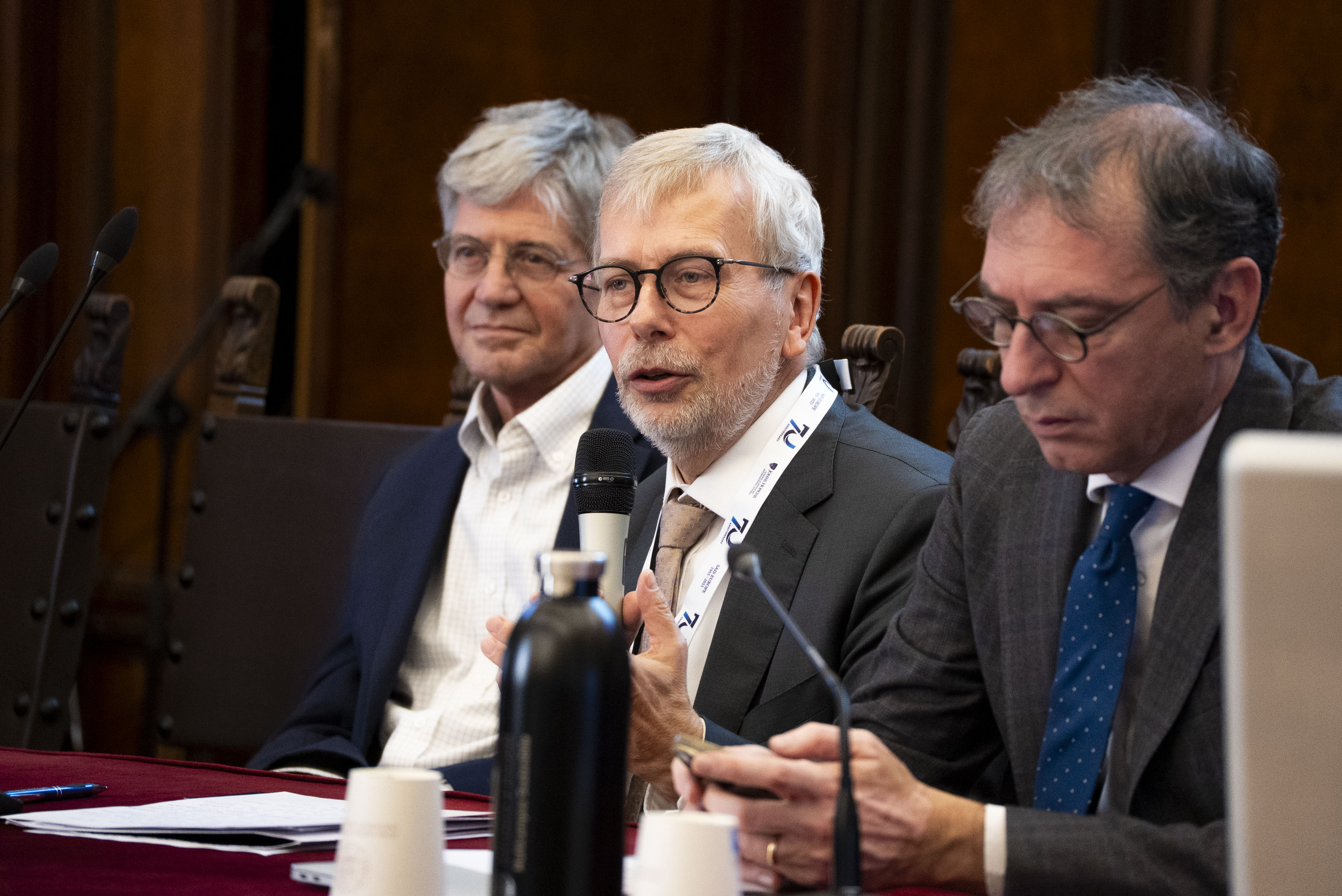
In their concluding remarks, Sergey Radchenko, Francesco Moro and Enrico Fardella converged on a diagnosis: Europe stands at a crossroads between marginalization and renewed agency. The future of EU–China relations will be shaped less by labels than by Europe's ability to manage dense interdependence while asserting a more confident, interest-driven and principled autonomy within a fractured global order.
Event Photos
Event Materials
Program_Turning_Tides PROGRAM.pdf