Event Recap
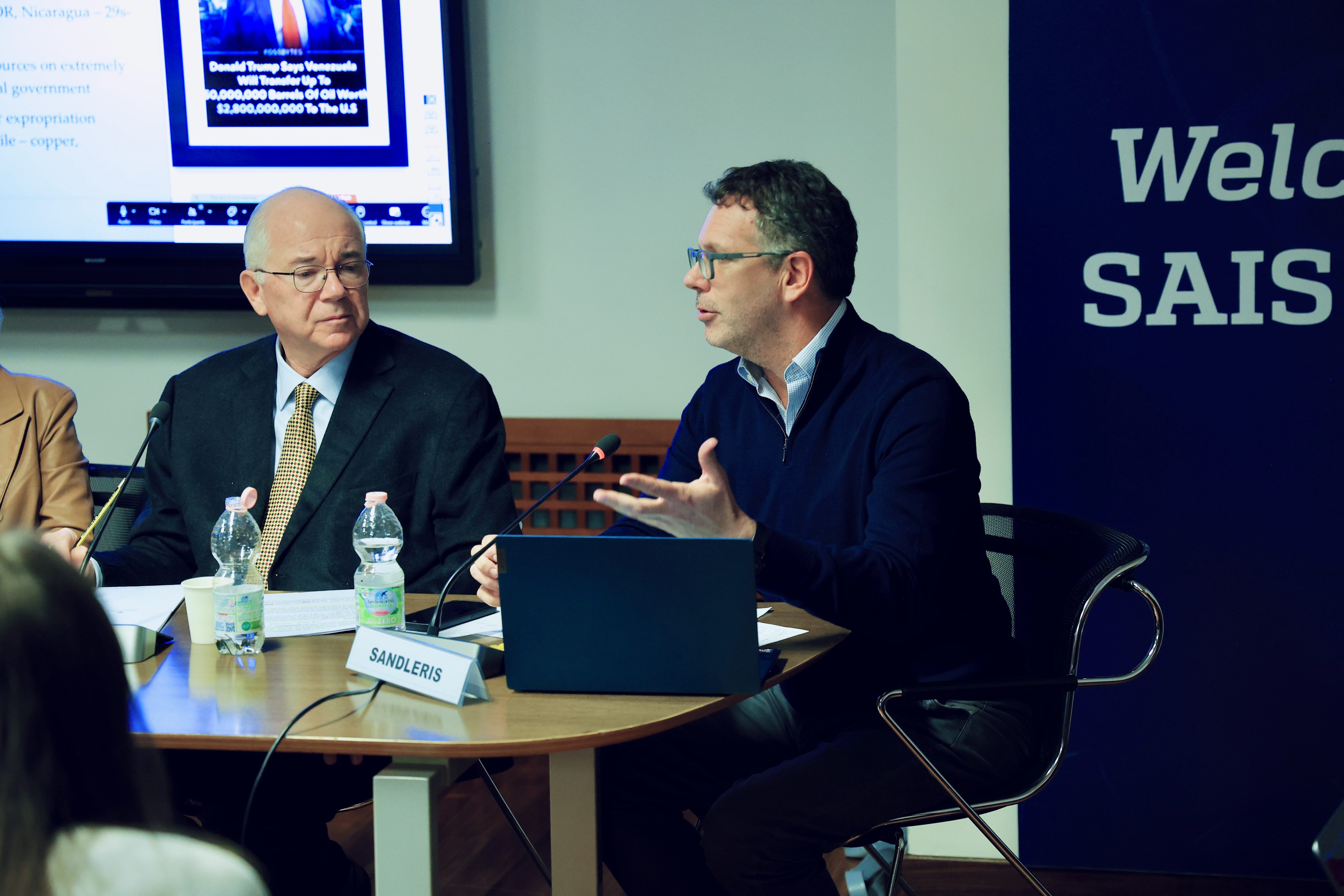
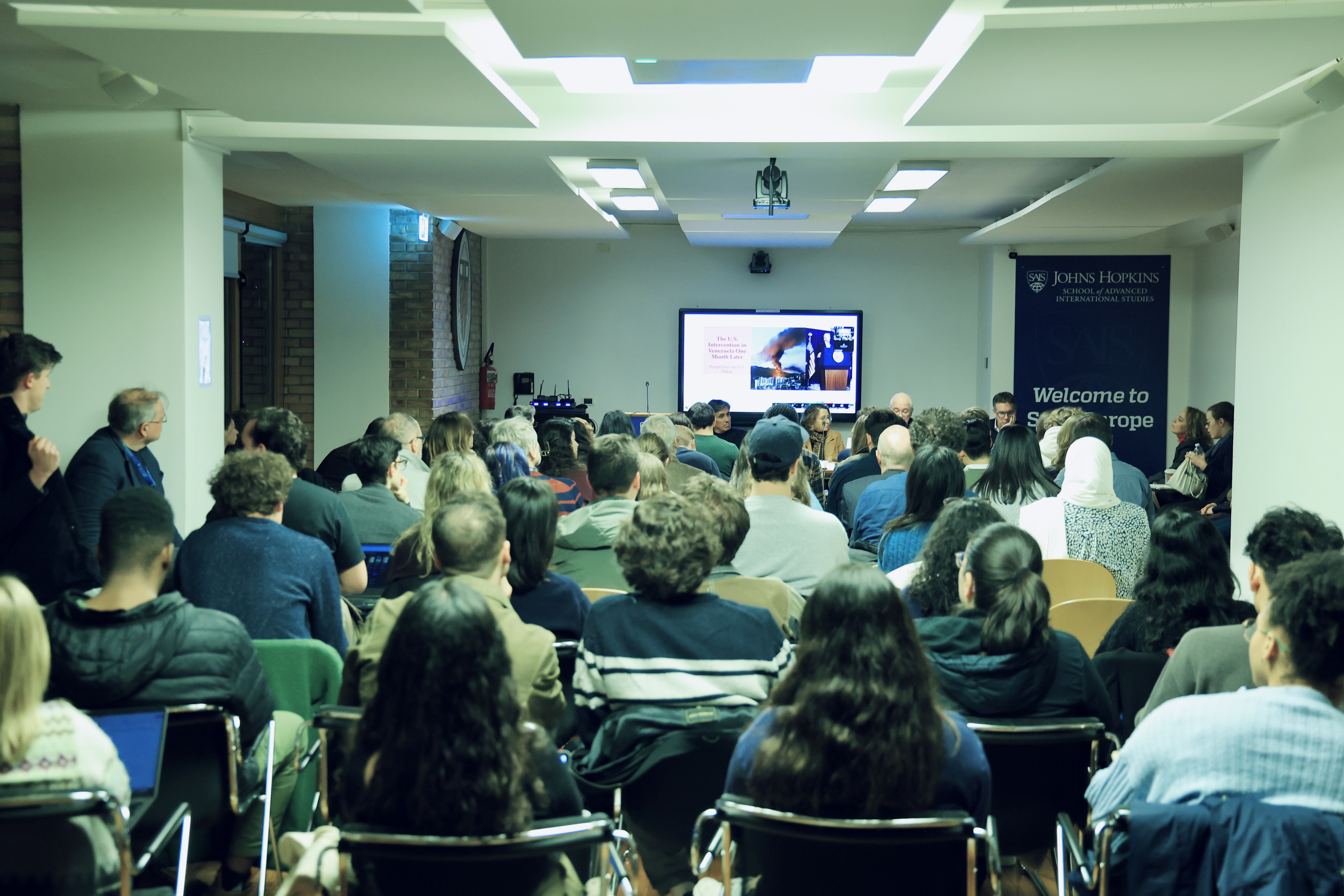
One month after the U.S. intervention in Venezuela, the BIPR hosted a panel discussion examining its political, economic and regional implications. The event featured Rafael Ramírez, former Permanent Representative of Venezuela to the UN and former Venezuelan Minister for Energy and Petroleum; Juan José Gómez-Camacho, Senior Fellow at SAIS and former Mexican Ambassador to the UN and the EU; and Jacqueline Mazza, Senior Adjunct Professor of Latin American Studies. The discussion was moderated by Guido Sandleris, Professor of Economics at SAIS and Universidad Torcuato Di Tella in Argentina.
Opening the discussion, both former ambassadors condemned the U.S. intervention as a serious violation of sovereignty and international law. At the same time, they situated recent events within Venezuela's prolonged political and humanitarian crisis, marked by extensive human rights violations, economic collapse, international isolation, and the displacement of nearly eight million people.
"Maduroism" and concerning transitional process
Ramírez noted that while release and amnesty of some political prisoners offered a brief moment of hope, the underlying system remains unchanged. He described this persistent system as "Maduroism," where the regime acts solely in its own interest driven by opportunism. Looking ahead, Ramírez expressed deep concern regarding the transitional timeline. While the Venezuelan constitution mandates elections within six months, the U.S. has signaled an 18-to-24-month window—a discrepancy that, in his view, further weakens sovereignty. The former oil minister emphasized that while Venezuelans remain owners of natural resources on paper, production, licensing, and revenues are now controlled by the U.S.—an arrangement violating not only the constitution but also depriving the country of resources needed for recovery. He underscored the gravity of the situation, stating: "Now, we don't have control of the country, no control of the transition, no control of the oil."
Narrative vs. Reality: The Extraction Operation
Professor Mazza complemented this view with a sharp academic analysis of the Trump Administration's stated objectives versus its actions. While the official narrative focused on a "drug war," Mazza pointed out that strikes on low-level drug runners neither matched the military build-up nor disrupted trafficking networks. She noted that major drug trafficking routes lie elsewhere. Instead, Mazza characterized the January 3rd military activities as an "extraction operation" akin to the capture of Osama bin Laden, noting the absence of U.S. ground troops. She highlighted a significant precedent: the U.S. has established extraterritorial control over foreign natural resources, with oil revenue already directed to a Qatari bank account managed by U.S.-handpicked houses.
Regional and Global Implications
Gómez-Camacho broadened the lens to the regional and international sphere. He reinforced the legal critique, stressing that the intervention did not resemble a law enforcement operation but rather echoed historical precedents where U.S. jurisdictional claims have overridden sovereignty in the region. He highlighted the increasing U.S. pressure on Mexico to cease exports to Cuba, which has lost its Venezuelan "lifeline." The region operates in the same "box," where diplomatic compromises on migration, trafficking, or border control can be traded for unrelated issues.Beyond the Americas, he contended that the intervention serves as a demonstration of military power directed at China and Russia. He concluded by warning that for smaller states the erosion of international law creates an increasingly precarious global environment.
Despite differing emphases, the panelists converged on a shared concern: that the intervention risks deepening regional instability while reclaiming national control over Venezuelan resources seems more difficult than ever before.
Event Photos
The US Intervention in Venezuela One Month Later
hosted by Professor
Guido Sandleris
Juan José Gómez-Camacho
Senior Fellow at SAIS Europe; Former Mexican Ambassador to Canada, to the United Nations, to the European Union, to Belgium and Luxembourg, to Singapore and to Myanmar and Brunei
Jacqueline Mazza
Senior Adjunct Professor of International Development, SAIS Europe; Senior Adjunct Professor of Latin American Studies and Development, SAIS, Washington DC
Rafael Ramírez
Former Permanent Representative of Venezuela to the United Nations (2015-2017); Former Venezuelan Minister for Energy and Petroleum (2002-2013), and Former President (CEO), Petróleos de Venezuela, PDVSA (2004-2014)
Guido Sandleris
Moderator: Professor of the Practice, SAIS Europe and Professor of Economics, Universidad Torcuato Di Tella, Argentina



.jpg)
.jpg)
.jpg)
.jpg)