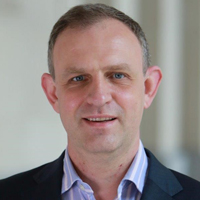
Bio
Sergey Radchenko is Wilson E. Schmidt Distinguished Professor
Director, Bologna Institute for Policy Research at SAIS Europe
Sergey Radchenko is Wilson E. Schmidt Distinguished Professor at SAIS Europe, and Director, Bologna Institute for Policy Research. Previously he was Professor of International Relations, Cardiff University. Radchenko has an international reputation for research on the history of the Cold War. He has written on Sino-Soviet relations, on Soviet and Chinese foreign policies, on atomic diplomacy, and on Cold War crises. In addition he has published work on North Korea and Mongolia and continues to have interests in the international politics of East and Central Asia and in contemporary Sino-Russian relations, Russian foreign policy, and Russia-NATO relations. He has served as a Global Fellow and a Public Policy Fellow at the Woodrow Wilson Centre (in Washington D.C.), and as the Zi Jiang Distinguished Professor at East China Normal University (Shanghai). Currently his research interests center around the global history of the Cold War. He is a frequent contributor to
The New York Times, The Washington Post, Foreign Policy, National Interest, The Moscow Times, and other national and international media.
Courses
- Great Powers
This course explores foreign policies of China and the USSR from the Second World War to the present. It thus provides students with an understanding of the Cold War, the post-Cold War, and the post-post-Cold War, seen "from the other side." It is a counterpart course to another course run simultaneously by the same instructor: American Foreign Policy. Unlike AFP, GP largely ignores American foreign policy (though, of course, US actions or non-actions are addressed,
because they form an important backdrop for understanding foreign policies of China and the USSR; of the two, the USSR is given more weight throughout). We begin in 1945, seeking to uncover sources of Soviet conduct and understand the origins of the Cold War from a Soviet perspective. We then proceed to consider China's road to revolution, the origins of the Sino-Soviet alliance, and the Korean War. Subsequent lectures explore Khrushchev's foreign
policy, including his misadventures in the Middle East and his efforts to be recognised and accepted by the United States. The Sino-Soviet split is also closely considered. The 1960s chapter look at Cuba and Vietnam (primary as seen from Moscow). We then delve into detente and the reasons for its demise. Lectures on the 1980s look at both the dangerous superpower crises (during the so called "Second Cold War") and the peaceful end of the Cold War on Gorbachev's watch. The course then explores Russia's foreign policy in the 1990s, and the unrealised promise of Russia's integration in the West. The final lecture covers Putin's years in power. We also will look at the dynamic of Sino-Russian relations, and the outlook for the Sino-American strategic competition.
- Contemporary Russian Foreign Policy
This policy seminar is designed to enable students to better understand the sources and manifestations of Russian foreign and security policy. Through course readings, class discussions, assignments, and a scenario exercise, students will assess how a variety of theoretical perspectives can or cannot explain Russian foreign policy choices and actions and Moscow's evolving relationships around the world. They will build on that to develop their own perspectives on how Russian foreign policy can be improved and how other states can develop more effective policies towards Russia